Web development

DDP Egypt · B2B Corporate Website

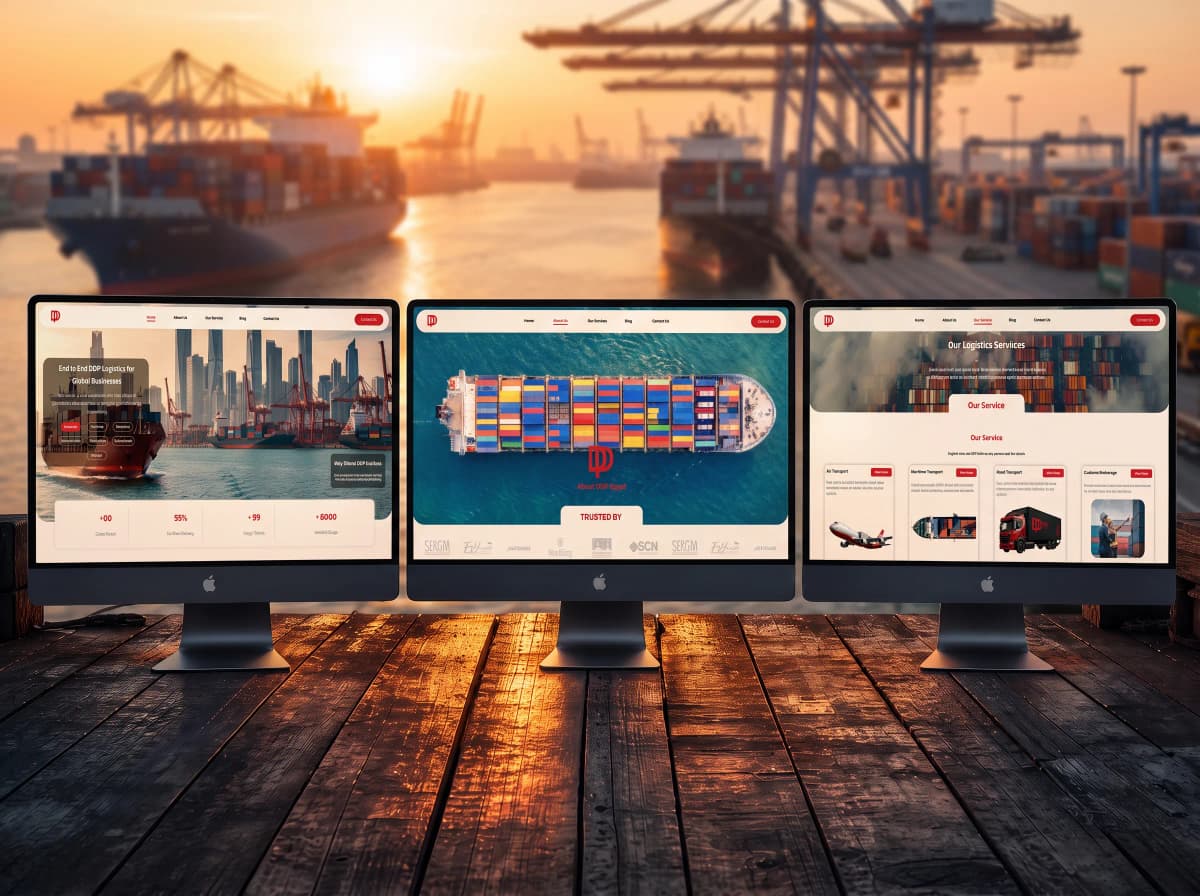
A freight forwarder and customs broker in Egypt whose customer is a logistics manager in another country who will never visit the office. The site is not an introduction to the company. It is the only evidence that the company exists, is serious, and can carry their shipment: eight services explained in English across fifteen pages.

8

freight services explained to a non-specialist, from air freight to military shipping

Client
DDP Egypt
Industry
International freight and customs brokerage

ddpegypt.comOpen the site

ddpegypt.com/

In short

01

The challenge

  • The company's own name is a customs term (DDP means Delivered Duty Paid) and most readers do not know it.
  • The customer is abroad and will never visit the office, so the site is the entire proof that the company exists and is serious.
  • Eight different services (air, sea, road, customs, insurance, warehousing, oversize cargo and military shipping) all to be explained to a non-specialist.
02

What we did

  • The whole site in English, because that is the customer's language rather than the local market's.
  • A page of its own for each of the eight services, explaining it plainly and ending on a quote request.
  • A small, light site (32 KB) so it opens quickly from anywhere in the world.
03

What came of it

  • A logistics manager in another country understands what the company does in under three minutes, and requests a quote without an introductory call.
  • All eight services are explained in the same order on one shared template, so comparing them is easy, and that ease works in the company's favour.
  • The site opens from abroad on an imperfect connection, which is not a technical optimisation here but the first impression of a freight company.

Project snapshot

How big a job this was

Small to medium, and deliberately so. The company does not sell from the site and has no catalogue or inventory. It has eight services that need explaining to somebody abroad assessing a partner. The right size here is the smallest site that does that job completely, not the largest one that could be built.

Project size
Small to medium
Type of site
A B2B services site
Who it speaks to
Logistics managers, importers and exporters outside Egypt looking for a freight partner in Egypt. They read in English, and they judge the company from its site because they will never visit it.
Built on
WordPress · PHP 8.3 · Apache
  • 15

    published pages

    Counted in the published sitemap, 6 September 2026

  • 8

    freight service pages

    Air, sea, road, customs, insurance, warehousing, oversize cargo, military

  • 5

    industry sectors addressed

    Automotive, pharmaceutical, electronics, furniture, food and beverage

  • 32 KB

    the home page document

    Measured on the live HTML, 6 September 2026

Scope delivered

  • Positioning and messaging in English
  • Information architecture for the eight services
  • UX and the quote-request journey
  • Interface design
  • A WordPress build with a dashboard for the client
  • Performance work on page weight and images

Technologies

  • WordPressContent management
  • PHP 8.3The application on the server
  • ApacheWeb server
  • Native lazy loadingDeferring every image until it is needed

The client

Whose site this is

DDP Egypt is an Egypt-based international freight forwarder and customs broker offering a door-to-door service: air freight for urgent and high-value cargo, sea freight on LCL, FCL and full-charter terms, domestic and regional road transport, customs brokerage with its documentation, warehousing and distribution, cargo insurance, oversize and out-of-gauge handling, and military shipping.

The name is the promise: DDP stands for Delivered Duty Paid, an international trade term meaning the seller carries the duties and clearance all the way to the buyer's door. The company works with defined sectors (automotive, pharmaceutical, electronics, furniture, food and beverage) and presents itself to international businesses shipping into and out of Egypt.

In international freight the customer is choosing a partner rather than buying a product. They choose from another country, will probably never visit the office, and will probably not meet anybody before sending a first shipment. The whole assessment happens at a distance.

And that assessment turns on small things: whether the site opens quickly, whether the services are explained or left vague, whether the company says who it works with, and whether there is an obvious way to ask for a quote. A slow or vague site in this category does not read as unstylish. It reads as an unstable company, and that loses a shipment before it starts.

Where it started

What the site was stalling on

The first problem on this project is the company's own name. DDP is a trade term (Delivered Duty Paid) meaning the seller carries the duties and clearance to the buyer's door. That is obvious to a logistics manager and opaque to a small-business owner importing for the first time. Both are prospective customers.

So the site has to work on two levels at once: professional enough for the specialist, plain enough for everyone else. The answer is not to explain the term in a paragraph. It is to state the promise in ordinary language before the term appears at all.

The second problem is that the company sells a service, not a product. There are no product photographs, no specifications, no catalogue, only a promise that the shipment will arrive. That promise rests entirely on trust, and trust at a distance is built from concrete things: services explained in detail, named sectors the company actually works in, clients by name, and a set of questions that answers the real worries.

The third problem is technical and simple: the customer opens the site from another country, possibly on an imperfect connection. A heavy site taking six seconds loses a visitor who was never going to send an email anyway.

  • The company's name is a customs term that part of the audience does not know.
  • A service, not a product: there is no catalogue, and the trust has to be built out of the explanation itself.
  • The customer is abroad and will not visit, so the site is the entire proof.
  • Eight different services to explain to a non-specialist without turning into a list.
  • The site is opened from distant countries, so its weight directly affects the first impression.

The brief

What the new site had to do

  • The promise stated in ordinary language before the term appears.
  • A full page for each of the eight services.
  • The sectors the company serves shown clearly.
  • A clear quote-request route from any page.
  • The site opening quickly from outside Egypt.
  • A dashboard the client can edit the services and content from themselves.

Strategy

How the problem was approached

The strategy here was an exercise in restraint. The temptation on a freight project is to build something large with shipment tracking, a rate calculator and a customer portal. The company needed none of those. It needed a logistics manager in another country to open the site, understand what the company does within three minutes, and ask for a quote.

So the decision was: the smallest site that does that job completely. Fifteen pages, eight of them services, the rest about the company and the route to contact. The effort that would have gone into features went into two things instead: the clarity of the explanation, and the lightness of the page.

The message

The first line on the site states the promise rather than the term: a trusted freight partner in Egypt, delivering door to door. DDP itself is explained afterwards for whoever needs it. That order lets the specialist and the non-specialist read the same page without either being lost.

The services

Eight services, each on a full page rather than a line in a list. Somebody looking for customs brokerage is not the same person as somebody looking for warehousing, different jobs, different worries. An independent page lets each one be found on its own and explain itself fully.

Sectors as a trust signal

The company says plainly who it works with: automotive, pharmaceutical, electronics, furniture, food and beverage. That is not boasting, it is a competence signal. Pharmaceutical freight has temperature and documentation requirements that have nothing in common with furniture, and a company naming both is implicitly saying it knows those requirements.

Objections

The questions section is not a general area. It answers the question that actually stalls the decision: air or sea? What does the difference cost, and what does it cost in time? Every new importer asks it, and answering it on the site closes an entire call and makes the company read as an adviser rather than a vendor.

Weight

The whole home page is 32 KB, and every one of its 46 images is deferred until the visitor reaches it. That figure is not a technical flourish: the customer opens this site from the Gulf, Europe or Asia, and the first impression of a freight company forms in the first three seconds.

Language

The site is entirely in English with no Arabic version, and that is a decision rather than an oversight. The company's customer is outside Egypt, and an Arabic version would have added maintenance and content for an audience that is not the target. One language done properly beats two with one of them neglected.

Design

How it looks, and why each call was made

The design is corporate and quiet: blue, a clear grid, plain icons and real freight photography. The aim is for the site to read as a company with operations rather than a company with a website.

Every service page is built in the same order: what this service is, who it suits, how it works, and the quote request. That repetition is deliberate, when a logistics manager reads three services and finds the same structure each time, they can compare, and easy comparison works in the company's favour rather than against it.

The photographs do one specific job: they say there are real operations behind the site. A stock shot of a container says the opposite, so the choice was imagery from the company's own work.

The promise before the term

DDP is a term half the audience does not know. A page opening on the term loses that half in its first line.

The same structure on every service page

The logistics manager is comparing. A uniform structure makes comparing easy, and easy comparison favours the company that explained itself well.

Sectors shown by name

We ship anything says nothing. We ship pharmaceuticals says we know what pharmaceuticals require, which is what the importer is looking for.

Every image deferred

46 images on a page opened from a distant country. Deferring all of them lets the first screen appear immediately instead of waiting on photographs.

English only

The company's customer is abroad. An Arabic version would add maintenance for an audience that is not the target, and one language done properly beats two with one neglected.

The build

How it was built

The site is built on WordPress, and in this case that is a considered choice. The company has no technical team, and the content changes at intervals. A service added, a page revised, an article posted. WordPress gives the client a dashboard they already recognise and can work in without a developer, which matters more than any technical gain on a project this size.

A service in the system is a page on a shared template, and the template is what guarantees every service is explained in the same order regardless of who writes it.

The real technical work went into weight: a 32 KB home page, 46 images all deferred, and 926 words in the HTML itself. That last figure is what keeps a PHP-rendered page fully readable to a search engine or a language model.

  • A shared service-page template, so every service is explained in the same order.
  • Every image deferred until needed, 46 of 46.
  • A WordPress dashboard handed to the client to edit without a developer.
  • A quote-request route on every service page.
  • A newsletter sign-up for people not yet ready to ask.

Features

What the site can do

Eight service pages on one template

Each explained in the same order: what, for whom, how, and the quote request.

Sectors named

Automotive, pharmaceutical, electronics, furniture and food. A competence signal rather than a boast.

Questions answering what stalls the decision

Air or sea, and what the difference costs in money and time. The first question any new importer asks.

A quote route from every page

No service page ends without an obvious way to ask.

A light page that opens from abroad

32 KB with every image deferred, so the first screen appears immediately.

A dashboard the client already knows

WordPress, so revising a page or posting an article needs no developer.

Measurement

Figures you can check yourself, right now

Open the domain and run PageSpeed on it. These are the figures you should find.

  • 54

    Performance

    Lighthouse desktop: run against the published domain, 6 September 2026

  • 89

    Accessibility

    Lighthouse desktop: run against the published domain, 6 September 2026

  • 100

    Best Practices

    Lighthouse desktop: run against the published domain, 6 September 2026

  • 92

    SEO

    Lighthouse desktop: run against the published domain, 6 September 2026

Build detail, including what is good and what needs work.

Best Practices 100 and SEO 92 are solid, and the page itself is only 32 KB (the lightest in the set) carrying 926 words readable with JavaScript switched off, so the explanation of all eight services is complete in the document the server sends.

But Performance 54 is not a good figure, and it looks strange beside a 32 KB page. The cause is not the weight. It is that the site is WordPress with plugins and scripts loading before the page appears, and although all 46 images are deferred, the first of them is not prepared to appear quickly.

That is worth saying plainly because it contradicts the project's own argument: the site was built light so it would open quickly from a distant country, and this figure says that promise is not yet complete. The item is open.

A second gap, written as it is: pages carry titles but no meta description, and the customs page's title still holds a name left over from an earlier template.

Search

What was set up for Google to read

The audience here searches in English and in service terms: freight forwarder Egypt, customs clearance Egypt, shipping from Egypt. So each service has its own page covering its own term, with all of the content present in the HTML so it can be read.

  • A page and its own URL for each of the eight services.
  • A written title on every page, with a canonical declared on it.
  • All content in the HTML, 926 words readable with no JavaScript.
  • Alt text on every image, 46 of 46.
  • A published sitemap covering every page, with robots closing the admin.
  • Blog content covering the freight questions asked in English.

01·From the build

What was actually built

Fifteen pages, and that is not a shortfall. It is the right size for this job.

The services (eight pages, each explaining a complete service: air freight for urgent and high-value cargo, maritime freight in its several forms, domestic and regional road transport, customs brokerage with its documentation and release procedures, warehousing and distribution, cargo insurance, oversize and out-of-gauge cargo, and military shipping) the kind many forwarders will not take at all.

The sectors, five named explicitly on the home page: automotive, pharmaceutical and healthcare, electronics and spare parts, furniture, and food and beverage. That is not a decorative list. It is a competence signal: an importer is looking for somebody who has shipped something like theirs before.

The company and its credibility. An About page, clients by name, client reviews, and a questions section answering what stalls the decision.

Operations. A quote request from every service page, a blog explaining freight questions in English, a newsletter sign-up for people not yet ready to ask, and a WordPress dashboard the client works in themselves.
02·From the build

The company's own name is the first obstacle

The first problem on this project is the company's own name. DDP is a trade term (Delivered Duty Paid) meaning the seller carries the duties and clearance to the buyer's door.

That is obvious to a logistics manager and opaque to a small-business owner importing for the first time. Both are prospective customers.

So the site has to work on two levels at once: professional enough for the specialist, plain enough for everyone else. The answer was not to explain the term in a paragraph. It was to state the promise in ordinary language before the term appears at all. The page says the goods arrive door to door with the duties paid, and then the term surfaces for whoever it concerns.

The second problem is larger: the company sells a service, not a product. There are no product photographs, no specifications, no catalogue, only a promise that the shipment will arrive. That promise rests entirely on trust, and trust at a distance is built from concrete things: services explained in detail, named sectors the company actually works in, clients by name, and questions that answer the real worry.

03·From the build

The solution was subtraction, not addition

The temptation on a freight project is to build something large: shipment tracking, a rate calculator, a customer portal, a dashboard for the importer.

The company needed none of those. What it needed was for a logistics manager in another country to open the site, understand what the company does within three minutes, and ask for a quote.

So the decision was: the smallest site that does that job completely. Fifteen pages, eight of them services, the rest about the company and the route to contact. The effort that would have gone into features went into two things instead: the clarity of the explanation, and the lightness of the page.

And this is worth saying plainly: building tools nobody will use is not an achievement. It is a cost to the client and a complication on the site. The right size for a project is not the largest thing that could be built. It is the smallest thing that does the whole job.

04·From the build

One template for eight services, and the repetition is the point

Every service page is built in the same order: what this service is, who it suits, how it works, and the quote request.

That repetition is deliberate. When a logistics manager reads three services and finds the same structure each time, they can compare, and easy comparison works in the company's favour rather than against it, because the company genuinely offers these services and comparison makes that visible.

Had each page been written in a different order, the reader would have to start over every time, spending attention that is already scarce in somebody assessing four companies in one sitting.

The design serves the same end: blue, a clear grid, plain icons and real freight photography. The aim is for the site to read as a company with operations rather than a company with a website. The photographs do one specific job (they say there is real work behind this) and a stock shot of a container says exactly the opposite.

05·From the build

WordPress here is a decision, not a compromise

Six of the seven sites in this set run on Next.js. This one does not.

The company has no technical team, and its content changes at intervals. A service added, a page revised, an article posted. WordPress gives the client a dashboard they already recognise and can work in without a developer, which on a project this size matters more than any technical gain.

Choosing the right tool for the case matters more than using the same tool for every case. A site that needs a developer to change a paragraph is not a better site. It is a stalled one.

The real technical work here went into weight: a 32 KB home page, 46 images all deferred until the visitor reaches them, and 926 words present in the HTML itself. That last figure is what keeps a PHP-rendered page fully readable to a search engine or a language model.

And weight here is not a detail. The customer opens the site from a distant country, sometimes on an imperfect connection, and judges a freight company in the first three seconds. A site taking six seconds to appear says something about a company that promises speed of delivery.

The phases

How the work ran

Deciding the right size

Establishing that the customer is abroad and assessing at a distance, which set the language, the size and the tone.

Messaging

Framing the promise in plain language ahead of the term, so specialist and non-specialist read the same page.

Information architecture

Eight services on independent pages sharing one template, and the decision to keep the site small.

Design

A quiet corporate visual language using imagery from the company's own operations.

Build

WordPress with a shared service template, and performance work on weight and image deferral.

Launch and handover

Launch, with the dashboard handed over and editing and publishing explained.

Handover

What became yours

  • Domain, hosting and source files in the client's name from day one
  • A control panel the content is edited from without a developer
  • A walkthrough for whoever takes the site over afterwards
  • A month of monitoring and fixes after launch

Outcome

The outcome

The site now stands in for the office. A logistics manager in another country opens it, understands exactly what the company does, finds their own service explained in a clear order, sees their sector named, and gets an answer to the question that actually stalls their decision (air or sea, and what that difference costs in money and in time) and then requests a quote. All without an introductory call, and without visiting Egypt.

The client manages that content themselves from a dashboard they already know, so the site updates without waiting on a developer.

Put simply: a company whose own name is a customs term, a service with no photograph and no specification (only a promise that the shipment will arrive) and a customer judging from a distance. The solution was not to add; it was to subtract. The smallest site that does the whole job: fifteen pages, eight of them services on one template, and a weight light enough that the first impression of a freight company is that its things arrive quickly.

Delivery figures

  • 8

    service pages on one template that makes comparison easy

    Counted in the published sitemap, 6 September 2026

  • 5

    industrial sectors named explicitly

    The published home page

  • 15

    pages. The right size rather than a shortfall

    Counted in the published sitemap, 6 September 2026

  • 32 KB

    the home page document, so it opens from abroad

    Measured on the live HTML, 6 September 2026

Work like this starts with a call about where you actually are

If this is close to what you need, the Web development page carries the whole method: what you receive, and the number the work answers to.

Our clients

Companies that chose to work with us

Some of our clients, across sectors with nothing in common.

  • Bravo Agrochemicals
  • El Masrya Office Furniture
  • Tareek El Shifa Center
  • Dr Ghada Yousry
  • Interact Labs
  • rawa
  • Next Industry
  • Medixia.ai
  • Falcon Water Treatment Systems
  • Golden Blast
  • Happy Plastics
  • Smart Modern School
  • Rafiq Academy
  • IPS Sports Academy
  • Mo Valley
  • Hyalure
  • G-Tour
  • Préime
  • Rahal
  • Dausar
  • El Gamry