Web Development
Your website should bring you business, not just impress.
You judge your site sitting comfortably. The person who actually judges it is in a hurry, has other tabs open, and gives you seconds to decide whether to stay. Looks win you the first second. Everything after it is a different job.
Search engine optimisation
brings you the people already searching for what you sell
Social media
brings you the people watching, who are not searching
Paid advertising
brings you the people who have never heard of you
AI media production
stops the people who need to see it before they believe it
Your site
where they convert, or leave
An enquiry or an order
Four services take your money and your time to reach people, and all of those people land on one page. If that page is slow, or unconvincing, or invisible in search to begin with, the four above are wasted and you have paid twice.
The foundation
What makes a website successful?
Design is the part people see. Under it sit four layers, and if one is missing the site stays handsome and inert. Every one of them is delivered and written into the quote.
- Content readable without JavaScript, so Google and AI models can see it
- A title and description written for each page, not repeated across them
- Compressed images with declared dimensions, so nothing jumps while loading
- An admin panel you edit without a developer
- Measurement that tells you where each enquiry came from
- DesignWhat the visitor sees
- Content and structureWhat Google reads
- Speed and performanceWhat keeps the visitor there
- The admin panelWhat keeps you independent
- MeasurementWhat tells you it is working
The work
Work you can open and measure yourself, right now
No mockups and no renders. Every site here is running, its domain is printed beside it, and the figure underneath is one we measured and you can measure again in the same minute.
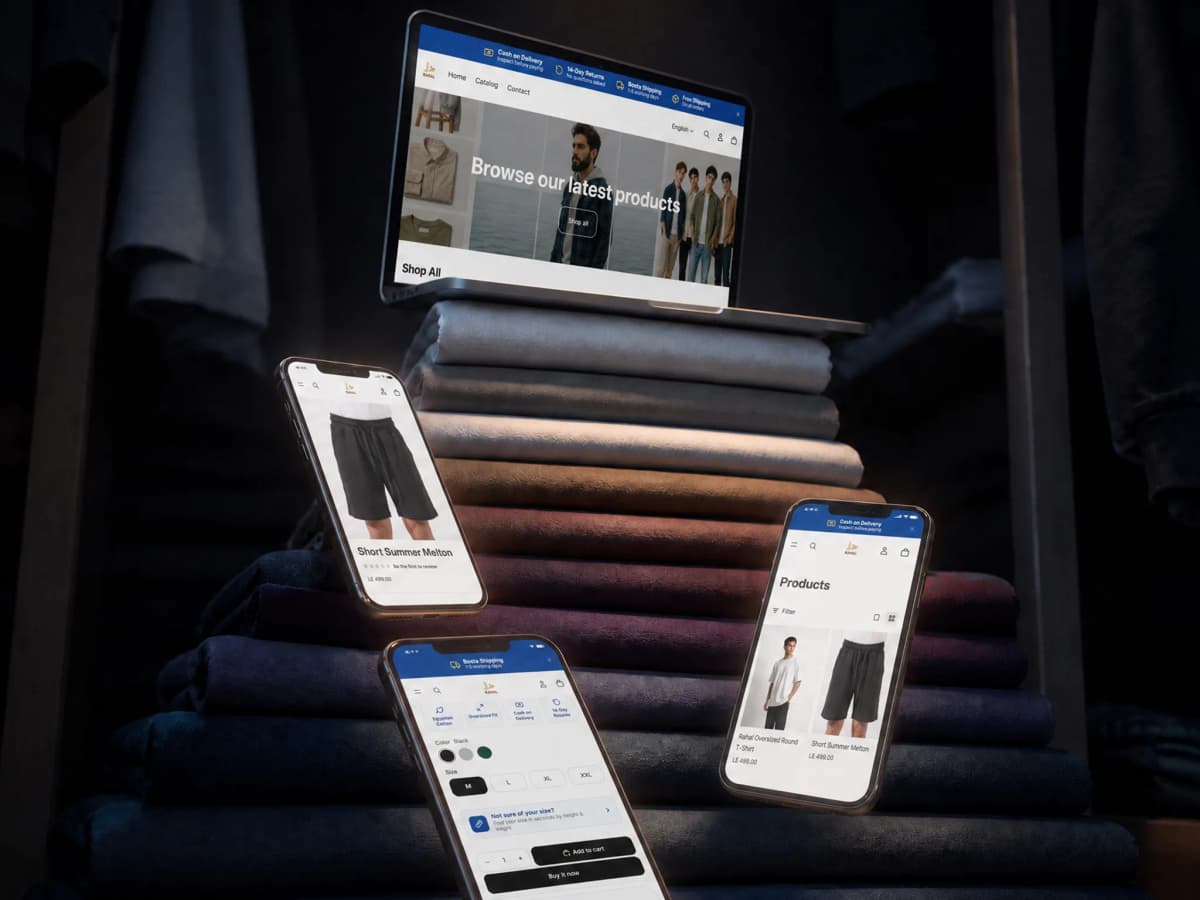
Rahal · E-commerce Store
An Egyptian clothing brand selling online to a market that pays on delivery and asks on WhatsApp. The store was built around that buying behaviour rather than around an imported storefront template: cash on delivery, inspection before payment, 14-day returns, and a named courier, in complete Arabic and English versions.
Open the project
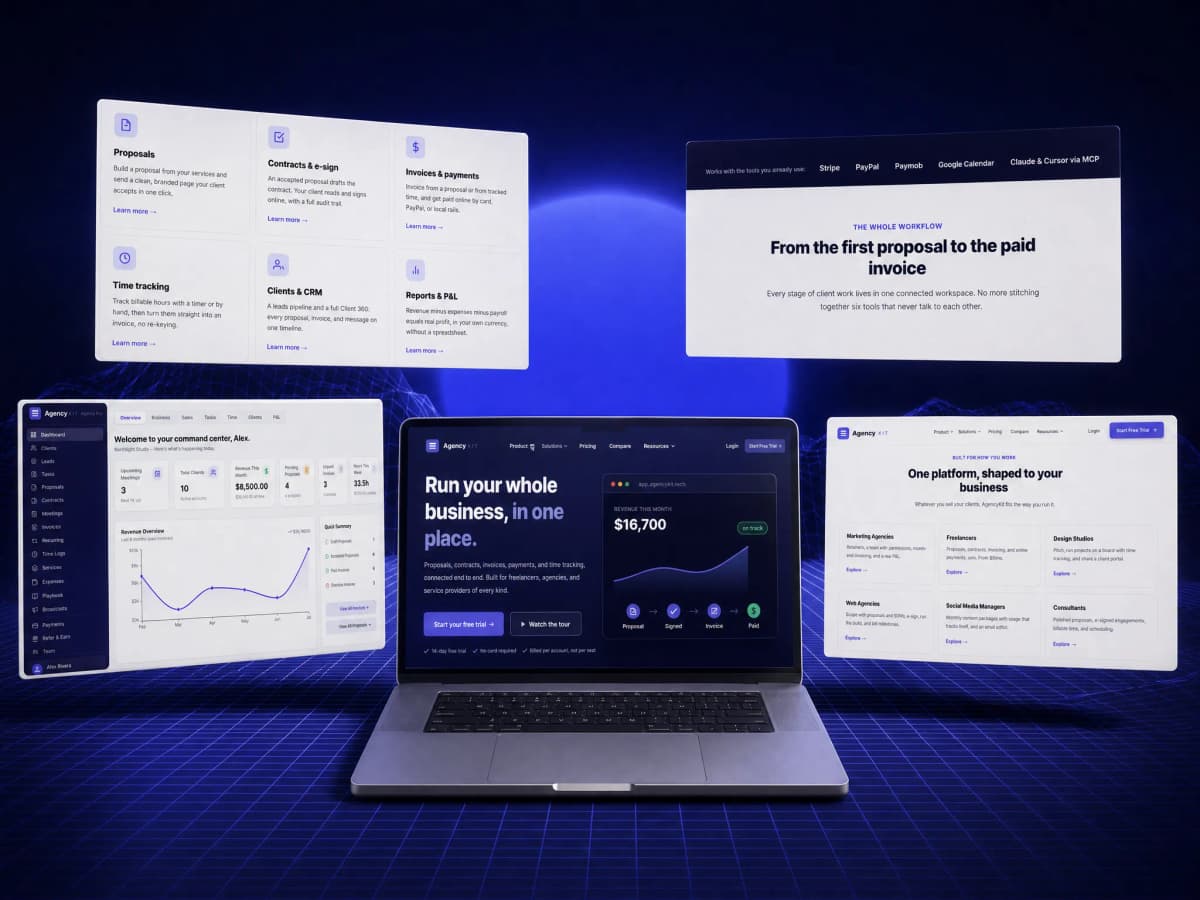
AgencyKit · SaaS Product Website
A subscription SaaS product whose purchase decision is made through search and comparison rather than a sales call. The site was built as a complete acquisition engine: Feature pages, comparisons, free tools and a content library, each catching a different search intent and each ending at the same free trial.
Open the project
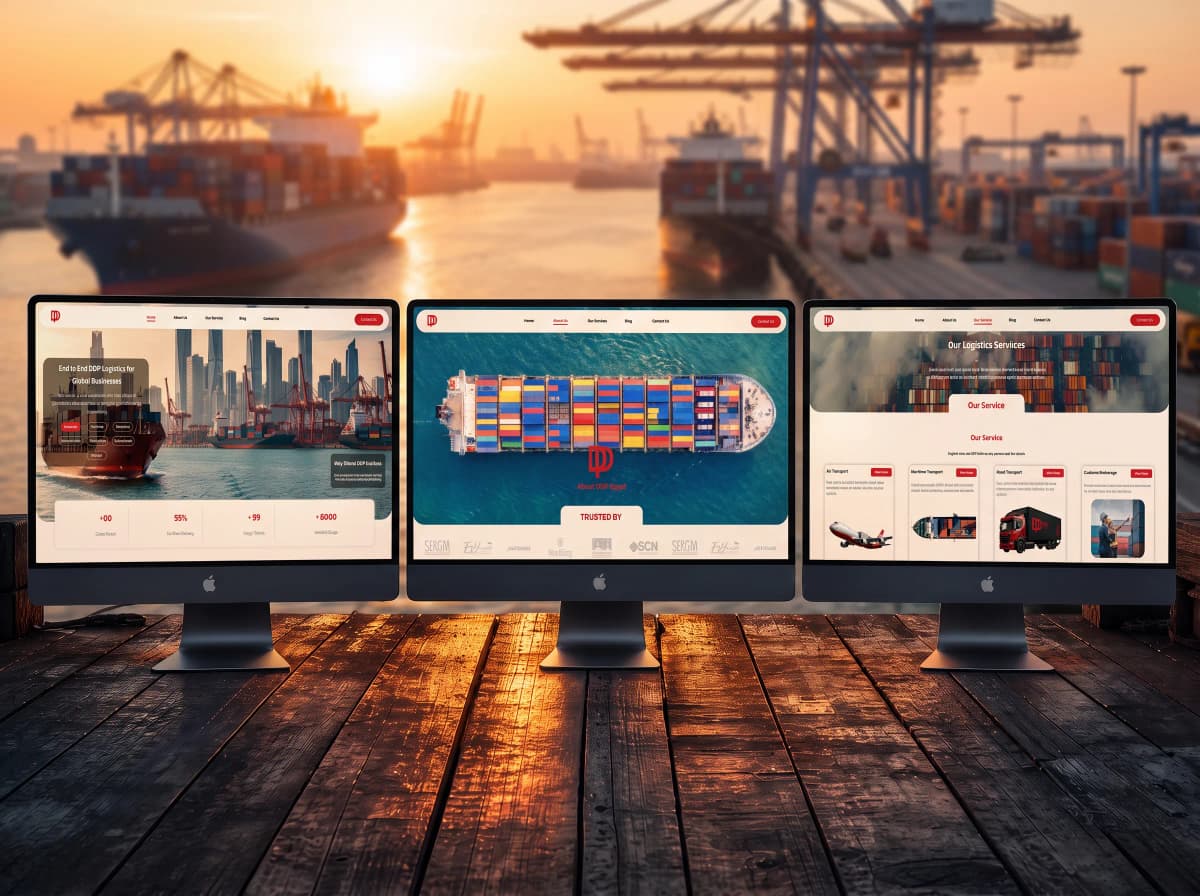
DDP Egypt · B2B Corporate Website
A freight forwarder and customs broker in Egypt whose customer is a logistics manager in another country who will never visit the office. The site is not an introduction to the company. It is the only evidence that the company exists, is serious, and can carry their shipment: eight services explained in English across fifteen pages.
Open the project
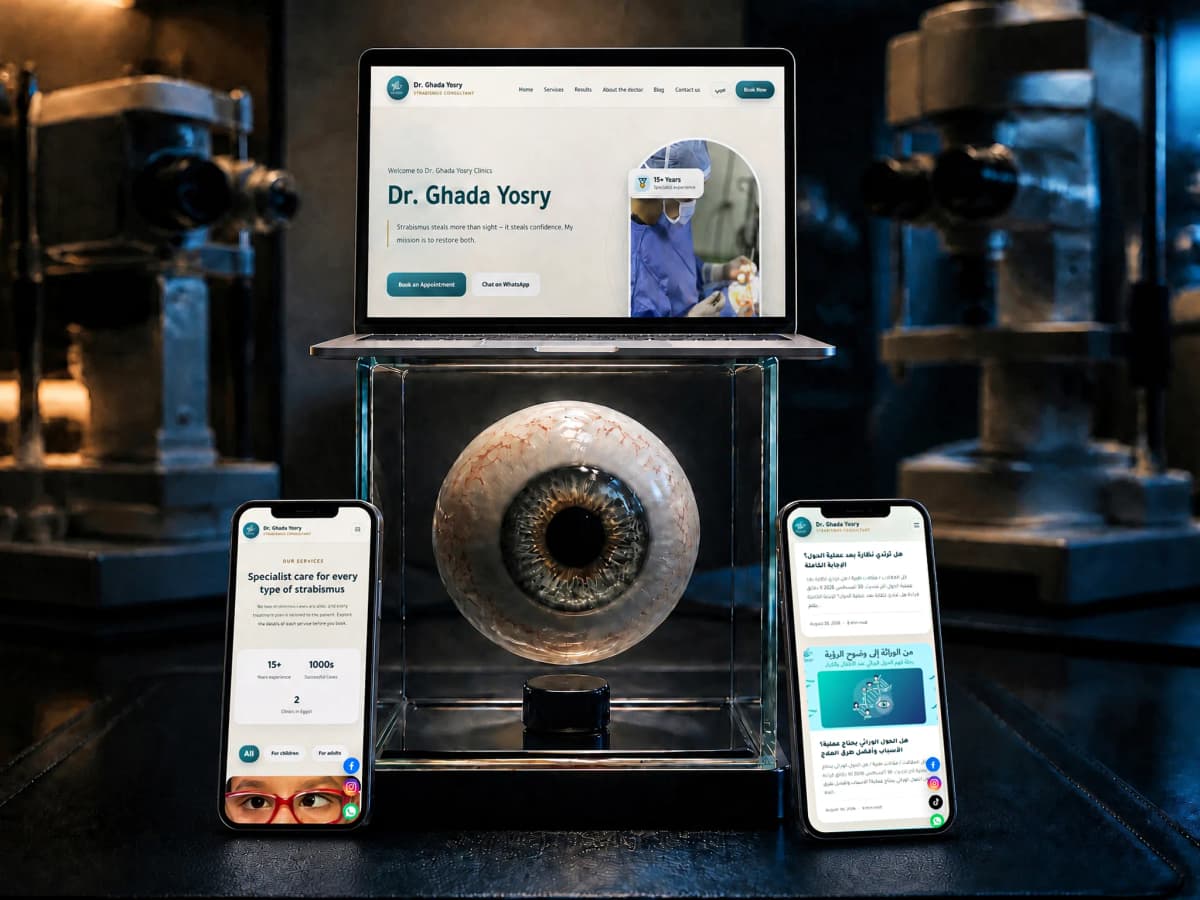
Dr Ghada Yosry · Medical Practice Platform
A strabismus surgeon treating adults and children. The narrowness of the speciality is the asset, and the site was built on it: twelve forms of the condition each with a full page, booking fixed on every screen, and two clinics in two governorates with entirely different schedules.
Open the project
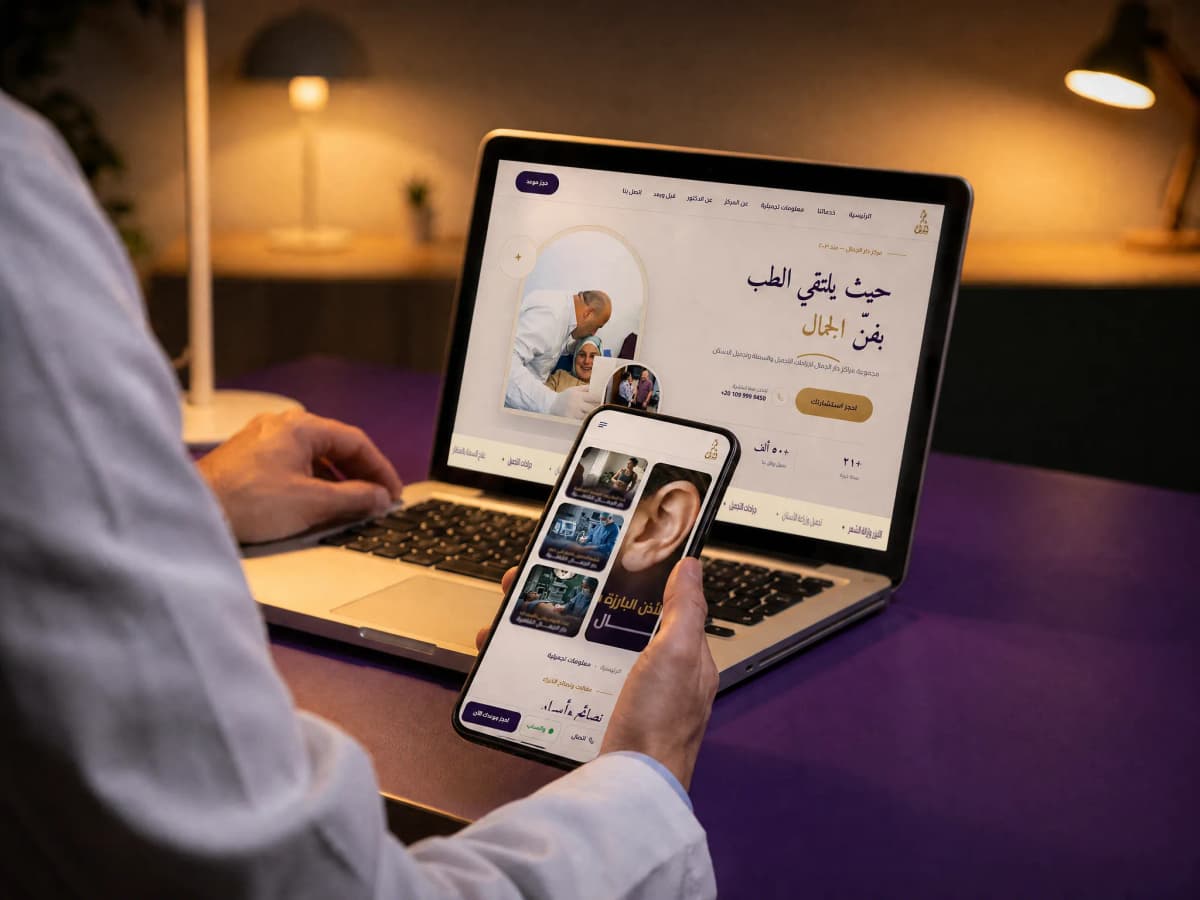
Dar El Jamal · Healthcare Platform
One centre holding three unrelated specialities (cosmetic surgery, dentistry and weight-loss surgery) and a patient who arrives for exactly one. Built as 22 service pages, each findable, persuasive and bookable on its own without passing through the other two.
Open the project
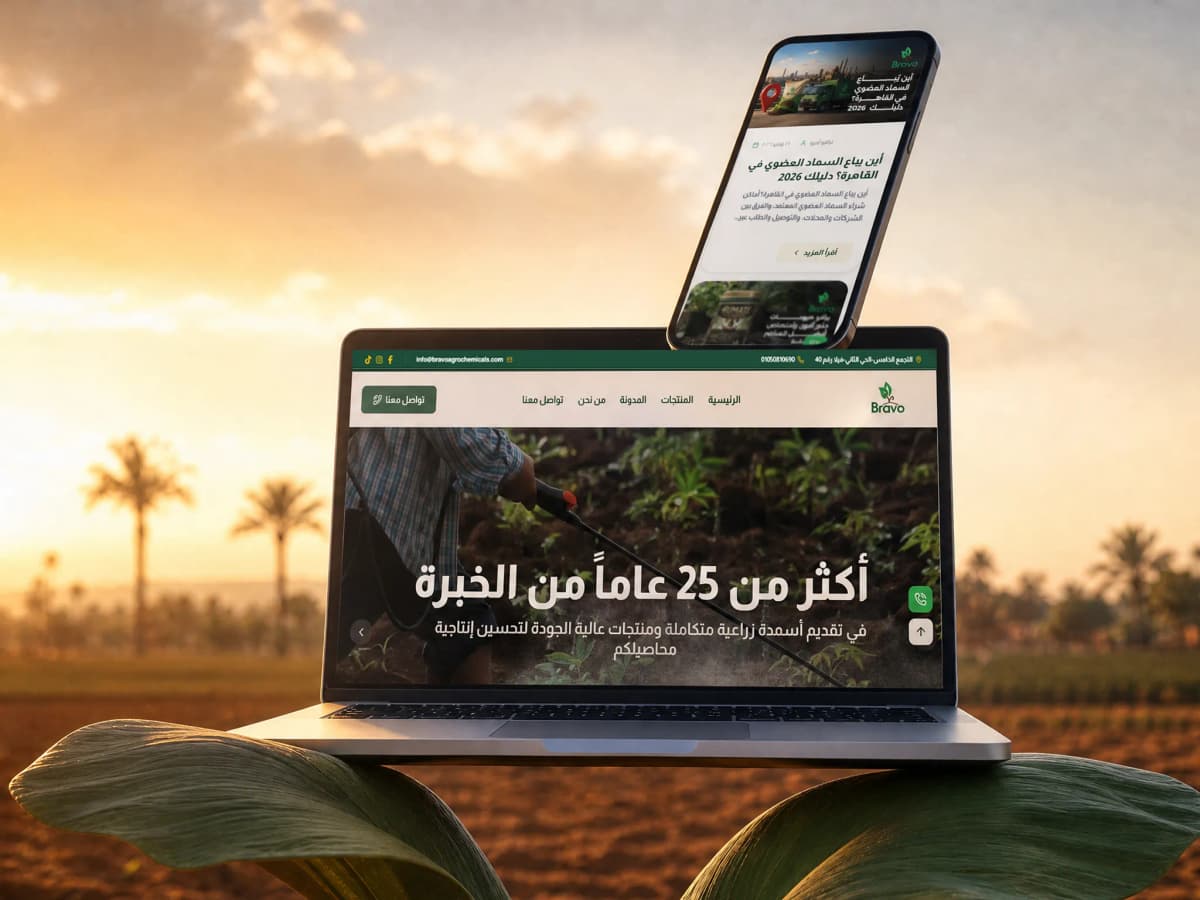
Bravo Agrochemicals · Product Catalogue & Content Hub
Twenty-five products across four categories, and an agronomy library written to the season. The audience are farmers arriving on a mid-range phone over a thin connection, searching by the problem rather than the product name, and those two facts shaped every decision on the build.
Open the project
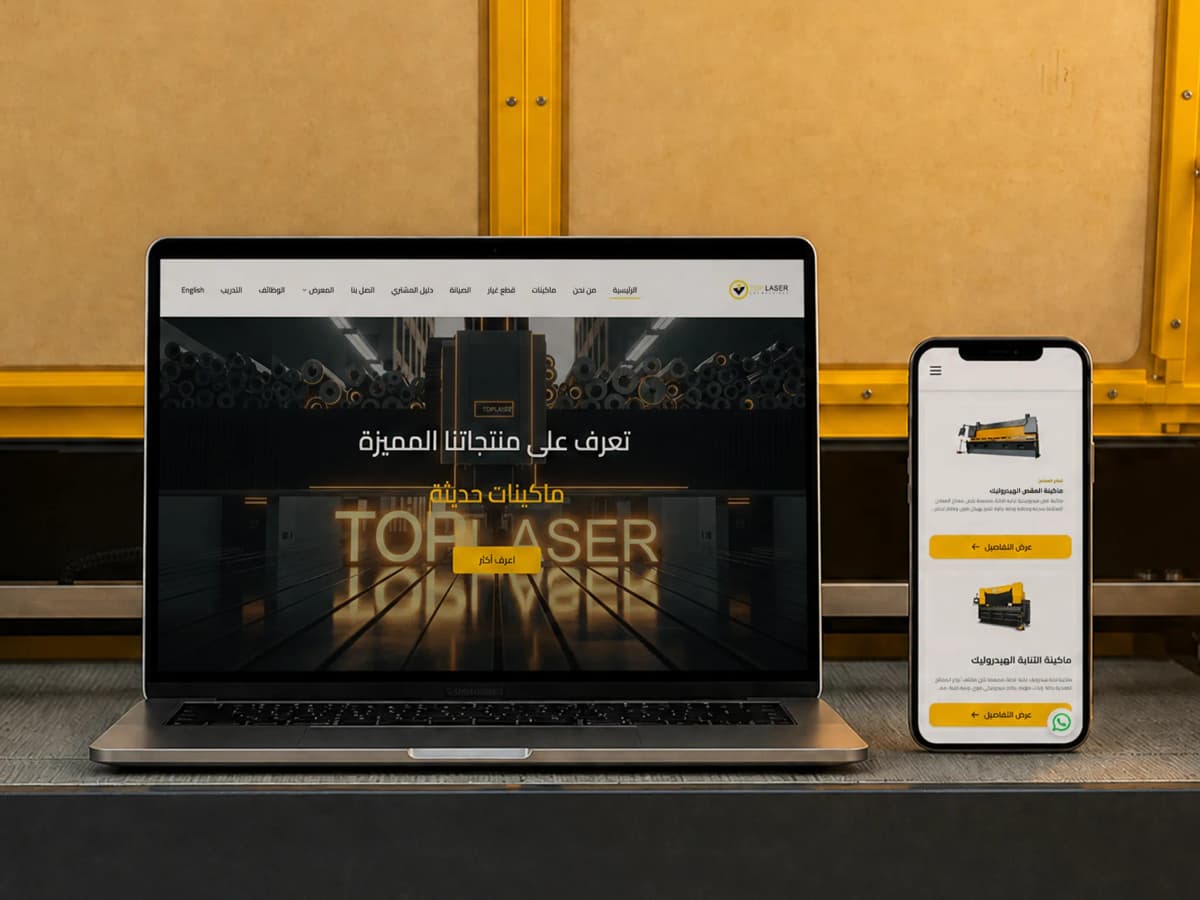
Top Laser · Industrial B2B Catalogue
A CNC and laser machinery supplier selling into Egypt, Saudi Arabia and the UAE. 132 models carrying their full technical specifications across six industrial sectors, in Arabic and English, for a buyer who compares for weeks before spending.
Open the project
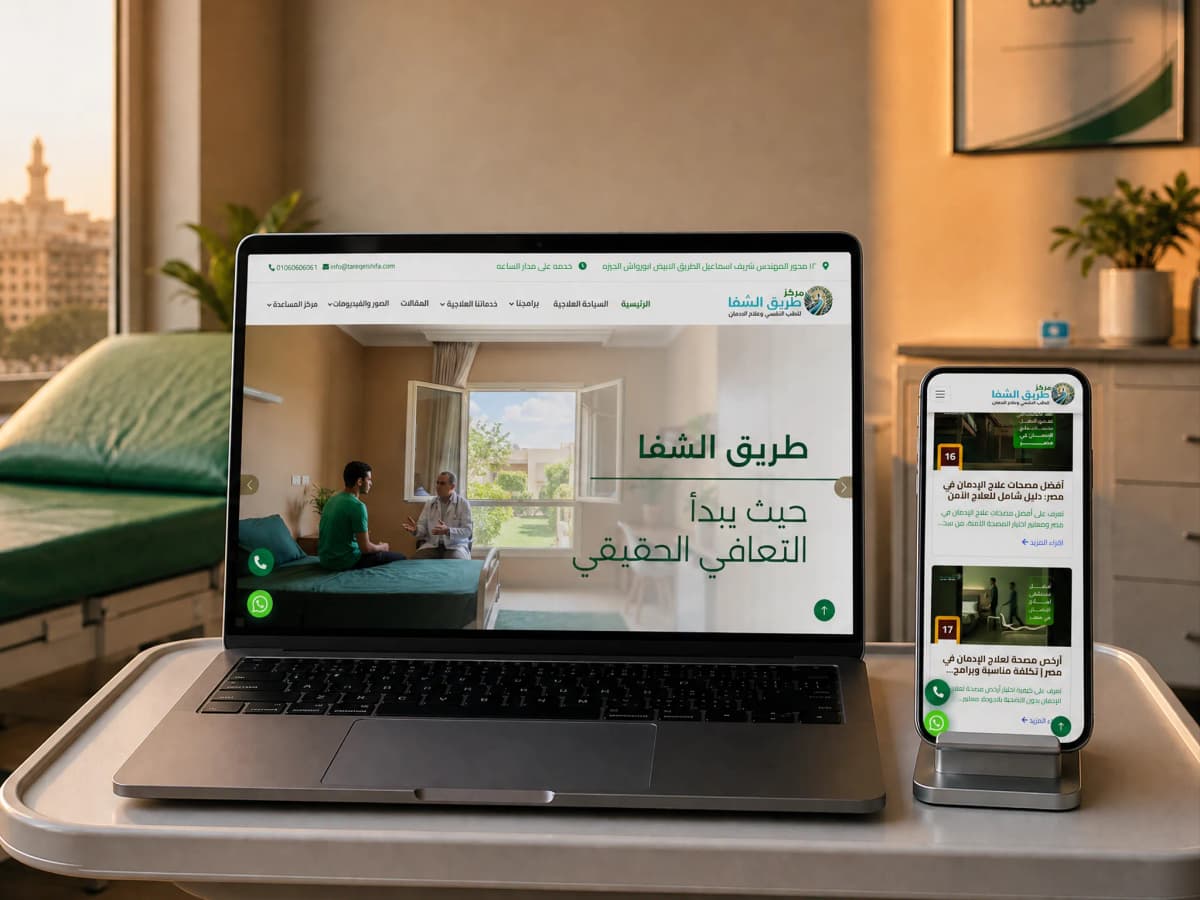
Tareq El Shifa · Healthcare & Content Platform
Families do not search for addiction treatment. They search by the name of the substance. So the site was built from search inwards: 24 programme and treatment pages, each on a URL matching the question that was typed, and a number that answers in the shell of every page.
Open the project
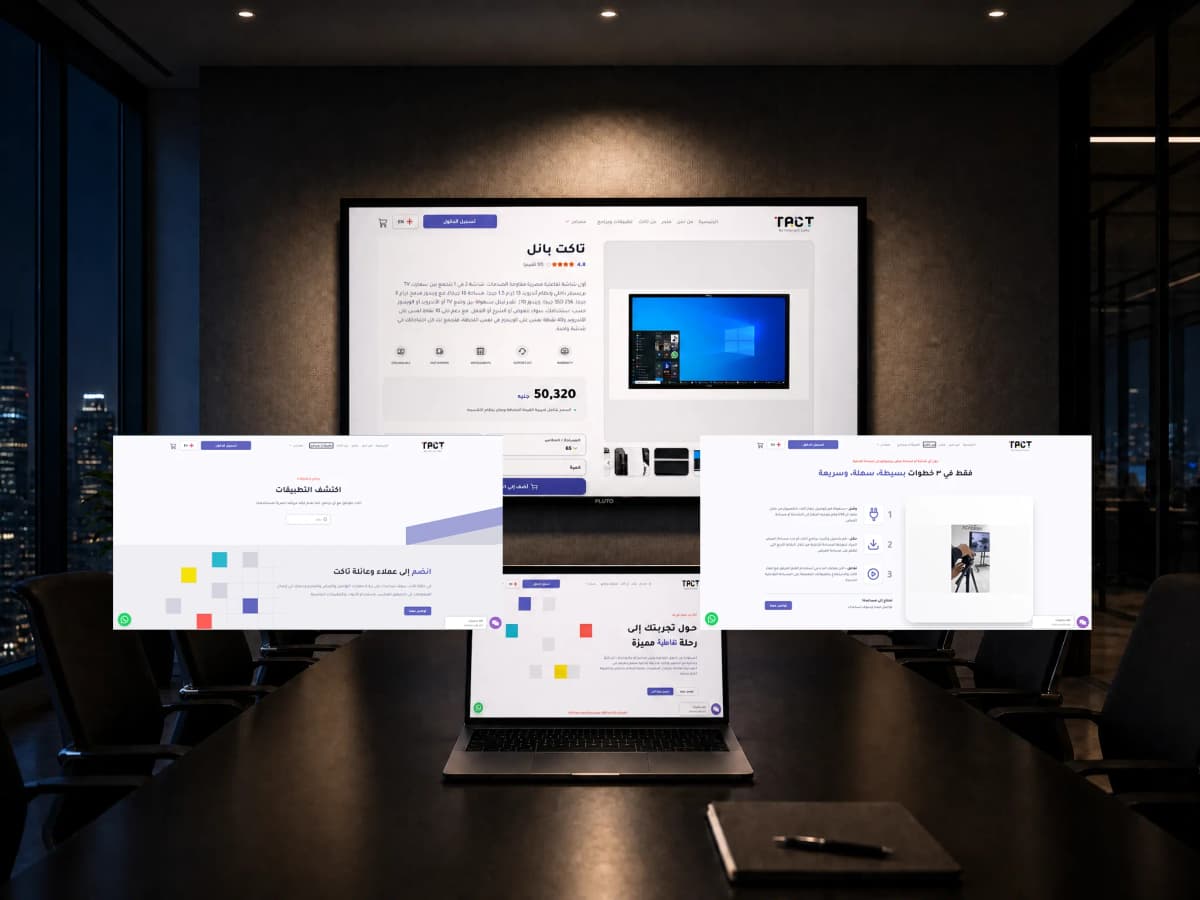
Interact Labs · Product & Commerce Platform
TACT is a device that turns any projection surface into an interactive one, in a category most buyers have never heard of. So the site has to do three different jobs at once: explain, sell, and distribute the software and its applications, across two complete Arabic and English versions.
Open the project
Those figures were measured on the sites themselves. Readable without JavaScript means the content lives in the HTML, which is what lets Google, ChatGPT, and Perplexity see a page instead of an empty shell.
See all the workMore work onInstagramFacebook
How the work runs
Six stages, each ending in something you can see
You are not waiting two months to be shown a website at the end. Every stage closes with something you review and approve.
01
Map and research
The pages and their order, the phrases you should be found for, and an inventory of every working URL you have today so none is lost.
02
Content
Words before design. A page composed around placeholder text breaks the moment the real words arrive.
03
Design and structure
The key pages designed with real content, on desktop and mobile, before any of it becomes code.
04
Technical build
Built and tested across browsers and devices, with speed and accessibility measured and fixed before you see it.
05
Launch and measurement
Migration, redirects, confirming Google can see the pages, and the tracking that tells you where an enquiry came from.
06
A month of support
The first month after launch surfaces what testing never does. That month is fixing, at no extra cost.
The experience
The order that gets a visitor to the thing you want
Visitors do not read a page, they sweep it. The order is not taste: every scroll answers the question they arrived with, until they reach the button and it reads as the obvious next step.
- The first screen
- What you do, who for, and why not the other one. If a visitor has to scroll to learn that, they will not scroll.
- Proof before the ask
- Work, figures, or client names, before you ask for their details.
- A way to reach you on every screen
- Not a contact page alone. People decide to get in touch in a moment, and if there is no way in front of them they leave.
- Their objection before they voice it
- Every visitor arrives with one: what will it cost, how long, will I lose my rankings. The one you answer on the page is the one they do not leave to ask elsewhere.
- A page per service
- One page listing everything you do will rank for nothing. Each service needs its own.
The biggest fear
Will I lose my Google rankings when the site changes?
No, if it is done properly.
The drop that follows a redesign usually comes from one thing: somebody forgot the old URLs. Google knew your pages by their addresses, and when the addresses changed with nothing pointing from old to new, the pages became missing.
- A full inventory of every working page before we touch anything
- A 301 redirect from each old address to its new one
- The phrases you already rank for stay in the same places
- Rankings measured before the move and after, so a drop is seen and fixed
- With redirects in place
- Without them
Accessibility
Will the site be usable by anyone?
Yes, and it is not a luxury.
Some of your visitors read with difficulty, or use a keyboard only, or enlarge the text. The things that let them use the site are the same things that make it clearer for everyone else.
contrast
7.2:1
2.1:1
passes
fails
- Colour contrast that clears WCAG AA on every piece of text
- The whole site navigable by keyboard, with focus visible
- A text description on every image
- Buttons and links large enough for a thumb
- Motion stops for anyone who has turned it off in their system
The platform
We build on what suits your site, not on what we like
Each one wins somewhere. We tell you what we recommend and why, and if you have a preference we work with it and tell you its trade-offs.
WordPress
When you will manage a lot of content yourself and keep adding pages and posts.
Store platforms
Products, inventory, shipping, and payment, on whichever platform matches your size.
Custom code (Next.js)
When speed genuinely changes the outcome, the logic exists in no off-the-shelf plugin, or it has to connect to systems you run. The page you are reading is built on it.
Your own time
How much of your time will this take?
The question most often asked quietly. A website is not built without you, but it is not supposed to eat your month either. These are your approximate hours per stage.
Content is the only part that genuinely costs you time. The rest is our work, and yours is to review and approve.
- The map2
- Content6
- Design3
- Build1
- Launch2
Integration
One site, connected to what you already run
A site connected to nothing leaves you moving data by hand. A connected one gets each enquiry to where it belongs on its own.
- Google Analytics
- Meta Pixel
- Booking system
- Payment gateway
- Shipping
- CRM
The cost
What will the site cost?
There is no number here, because any number on an agency page is its floor and it changes the moment you talk. What we can do is show you what moves it, so you can place your own case before you ask us.
Pushes the price up
- Page count: a page per service or product
- Functionality that is not off the shelf: booking, accounts, calculators, advanced search
- Integration with systems you run: accounting, CRM, inventory, payment
- A store: products, variants, shipping, invoices
- Two languages: a full content set and journey for each
- Content that does not exist yet
Brings the price down
- Content ready, even in draft
- An existing visual identity, already agreed
- A contained page count
- One person who approves, rather than a committee
- Standard functionality: a form, a blog, a catalogue
- Starting with a first version and extending later
The quote you receive is not one number. It is a list of pages and functions, each priced, plus the timeline and the payment stages. So you can drop something and watch the price move, and compare us against any other quote line by line.
The service
What our web development covers
Build
- Company brochure sites
- Online stores
- Product and SaaS sites
- Campaign landing pages
- Content sites and blogs
- WordPress development
- Next.js development
- Rebuilding older sites
Technical
- A full technical SEO foundation
- Structured data
- Speed and Core Web Vitals
- Migration with rankings preserved
- sitemap and robots.txt
- Analytics and Tag Manager
- SSL and security
- Backups
Experience and content
- Page copywriting
- Arabic and English interface design
- Full RTL support
- WCAG AA accessibility
- Mobile-first design
- WhatsApp and form integration
- An admin panel, with training
- A month of support after launch
Questions
What people ask before we start
These are the questions that come up on every first call. If yours is not here, ask, and you will get the same directness.
How long does a site take?
A mid-sized brochure site usually runs 4 to 6 weeks from the first meeting to launch. Stores, and sites with user accounts or integrations into other systems, take longer, and the quote states the period up front. The thing that moves the date most is content readiness: with copy, images, and information in hand, the project runs as agreed. Without them we write it, but we need your time in review, and that adds a week or two.
What does it cost?
It is set by the number of pages and the complexity of the functionality. A brochure site with a handful of pages is one thing, a store with hundreds of products plus payment and shipping is another, and a site with user accounts wired into a system you already run is a third. We do not publish a fixed price, because a number produced before knowing what the site has to do is a guess. What we do instead: half an hour to understand the requirement, then a detailed quote back, with no obligation.
Do you build on WordPress or custom code?
It depends on what the site has to do, not on what we prefer. We ask first whether you will manage the content yourself, whether it has to connect to systems you already run, and whether you sell online. Those answers settle the platform before anything else. We tell you what we recommend and why from the first meeting, and if you have a preference we work with it and tell you what it costs you later in speed, price, and maintenance.
How long until the site shows up in Google?
Indexing itself takes days to weeks, and that only means Google knows the pages exist. Ranking is a separate matter entirely and depends on competition in your field, the age of the domain, and the content. What we do guarantee is the technical foundation on any site we hand over: that every page can be read and indexed, carries a title and description written for it, is fast, has structured data, and that the sitemap and robots.txt work. We check that line by line before launch and send you the result. That is what makes ranking possible at all. If you need actual ranking work, that is the SEO service and it has its own page.
Do you design, or do you take a design that already exists?
We design, and we design with the real content. If you have a visual identity we work with it and extend it to the web; if you do not, we say up front that this is separate work that has to come first. If you already have a design from someone else, we review it and tell you honestly about anything that will cause trouble in the build.
Will it work well on mobile?
Most of your visitors in Egypt arrive on a phone, so the design starts at mobile rather than ending there. In practice that means testing on genuinely small screens rather than shrinking a window, making every tappable thing large enough for a thumb, keeping images light enough to open on a weak connection, and making sure forms are pleasant to fill with a phone keyboard. We hand over only after it has been tried on real devices.
What do you need from me to start?
Three things. Clarity on the goal: whether this site is meant to produce enquiries, orders, or simply a credible presence. Content, or the information to write it from: your services, products, prices if you publish them, and real photographs of your work. And one person who can approve, because when approval is split across several people a single review round takes a week instead of a day. If a domain and hosting already exist we need their details; if not, we set them up in your name.
Can I see a site you built and speak to its owner?
Every site we have built is live with its domain printed beside it. Open them and judge for yourself. On speaking to a client, yes: we will suggest one or two from roughly your field, and we ask them first, because it is not ours to hand out someone's number without permission. If that matters to you before deciding, say so and we will arrange it.
Tell us about the site you need
You do not need to have it all worked out. Tell us what you do and what you want the site to do for you, and we take it from there.
Your details come to us alone. We do not sell them and we do not add you to a mailing list.
Who replies
One of the people who does the work
Whoever reads your request builds the sites themselves. If you have a site now, send the link and you will get an opinion on it.